Good Momo Co. Closes Angel Round Ahead of First Retail Sale
- ByStartupStory | August 17, 2026
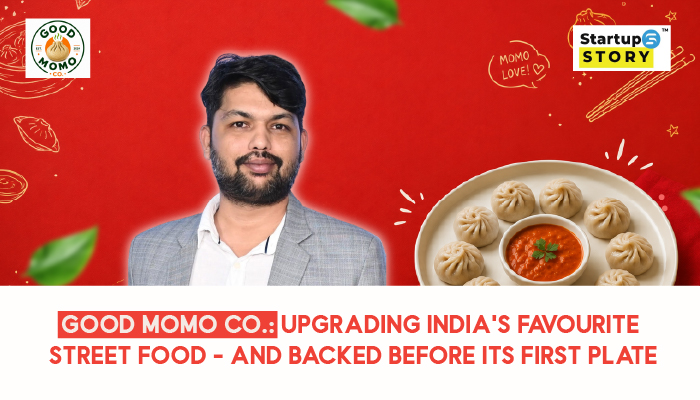
Good Momo Co., a freshly launched quick-service restaurant (QSR) brand, has closed an angel funding round even before selling its first momo, an unusual sequence that underscores investor confidence in the team and execution plan. The company enters India’s momo market, estimated at around ₹30,000 crore annually, where roughly 90% of sales come from unbranded carts and kiosks.
Rather than attempting a radical product reinvention, Good Momo Co. is positioning its offering around healthier, accessible alternatives to the street staple. The menu replaces maida with millet, and serves momos steamed or air-fried, priced competitively to sit alongside not above the informal market it intends to convert. This pricing-first approach aims to lower the barrier for customers who prioritize taste and value but are increasingly health-aware.
Investors say their conviction rested less on the recipe and more on founder Sivesh Kumar’s track record. Kumar has previously scaled outlets for established F&B brands, including Coffea, and runs Franchise Rock, a consultancy focused on franchise expansion. Backers are betting that his operational experience will reduce execution risk compared with a first-time founder. That said, industry history shows franchise-led QSR growth can be volatile, and past successes in other formats do not guarantee the same outcome for a different product or price point.
Good Momo Co. plans to open three outlets this month and has set an ambitious target of roughly 30 stores across Bengaluru within 12 months. The early openings will provide the first meaningful test of whether the brand’s franchise-driven model and value-oriented product can scale quickly while maintaining unit economics.
On the supply side, Good Momo Co. has signed a memorandum of understanding (MoU) with Thailand-based MaYing International, linked to the Siano House concept, to explore a B2B supply relationship into India and potential expansion into Thailand. The company notes that MoUs are non-binding and any commercial partnership will depend on subsequent agreements and performance milestones.
Consumers and investors should watch the first three stores for indications of repeat purchase, unit margins, and franchise partner enablement, the metrics that will decide if a branded, premium-adjacent momo can sustainably displace a largely informal category.
Also Read
Follow Startup Story


Related Posts