Zoho One’s “Growth, Delivered” explores a quieter, more intentional approach to B2B marketing
- ByStartupStory | April 9, 2026
Rethinking how brands communicate growth
In an ecosystem where B2B marketing is often driven by product-heavy messaging, performance metrics, and high-volume campaigns, Zoho One’s recent initiative takes a noticeably different route.
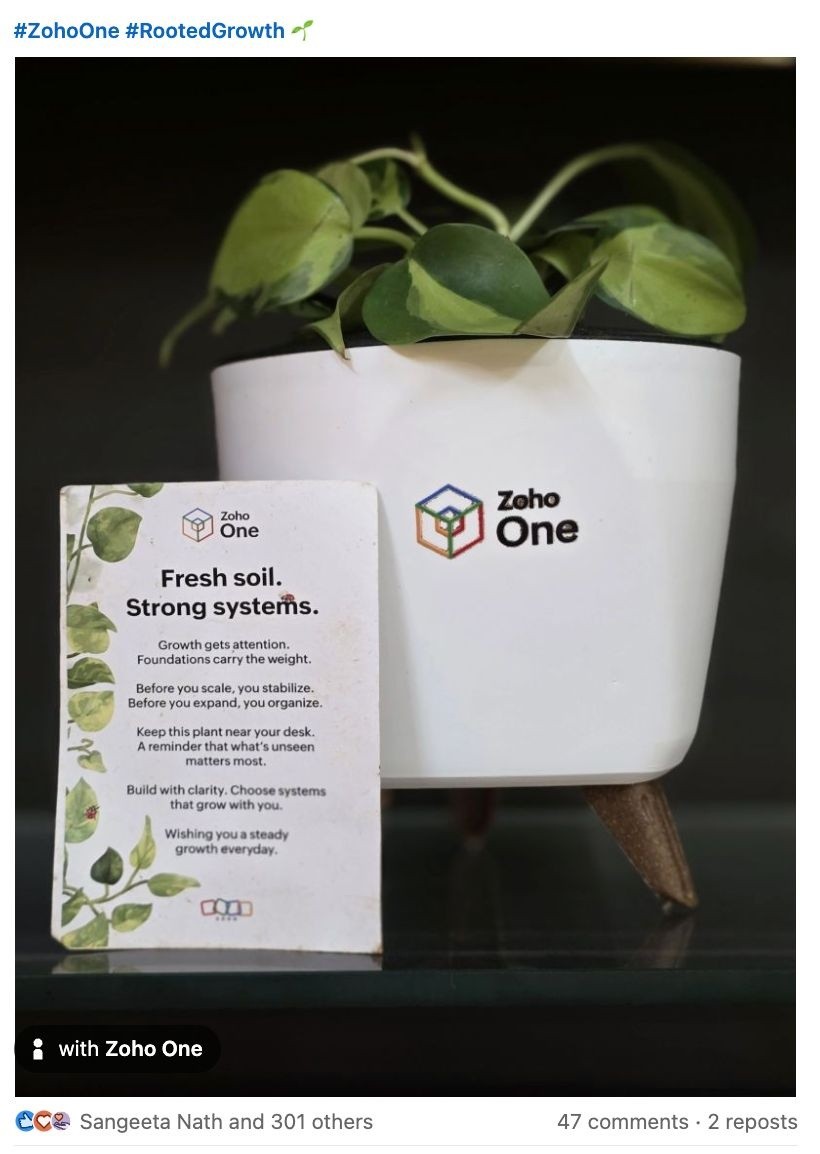
Titled “Growth, delivered.”, the campaign moves away from conventional formats and instead focuses on a simple, physical gesture to communicate a larger brand philosophy. Rather than relying on feature lists, value propositions, or aggressive distribution strategies, it expresses its message through something quiet, tangible, and intentionally minimal.
At its core, the initiative reflects a broader shift in how brands are beginning to approach engagement. Communication is no longer limited to what is said, but extends to how it is experienced. By replacing direct messaging with a lived interaction, Zoho One repositions engagement as something that is interpreted, not just consumed.
A gesture, not a campaign
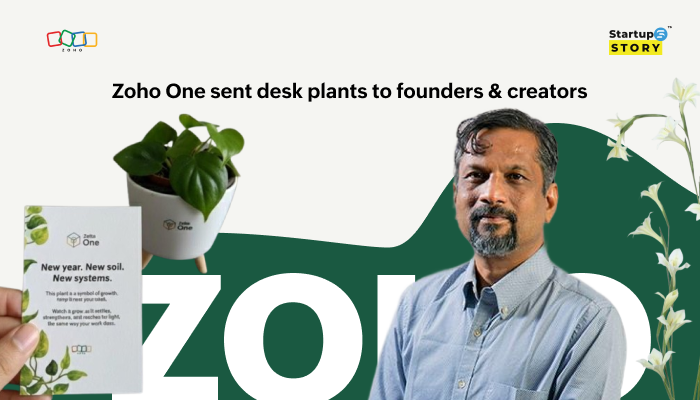
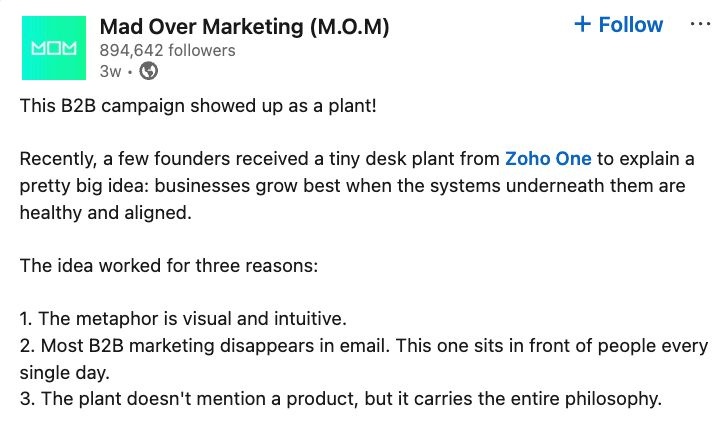
As part of the initiative, Zoho One sent desk plants to a select group of founders, creators, and customers. There were no product brochures, no detailed messaging, and no structured campaign requirements. Each recipient received a plant in a Zoho One–branded pot, accompanied by a short note:
“Here’s to fresh soil and new systems.”
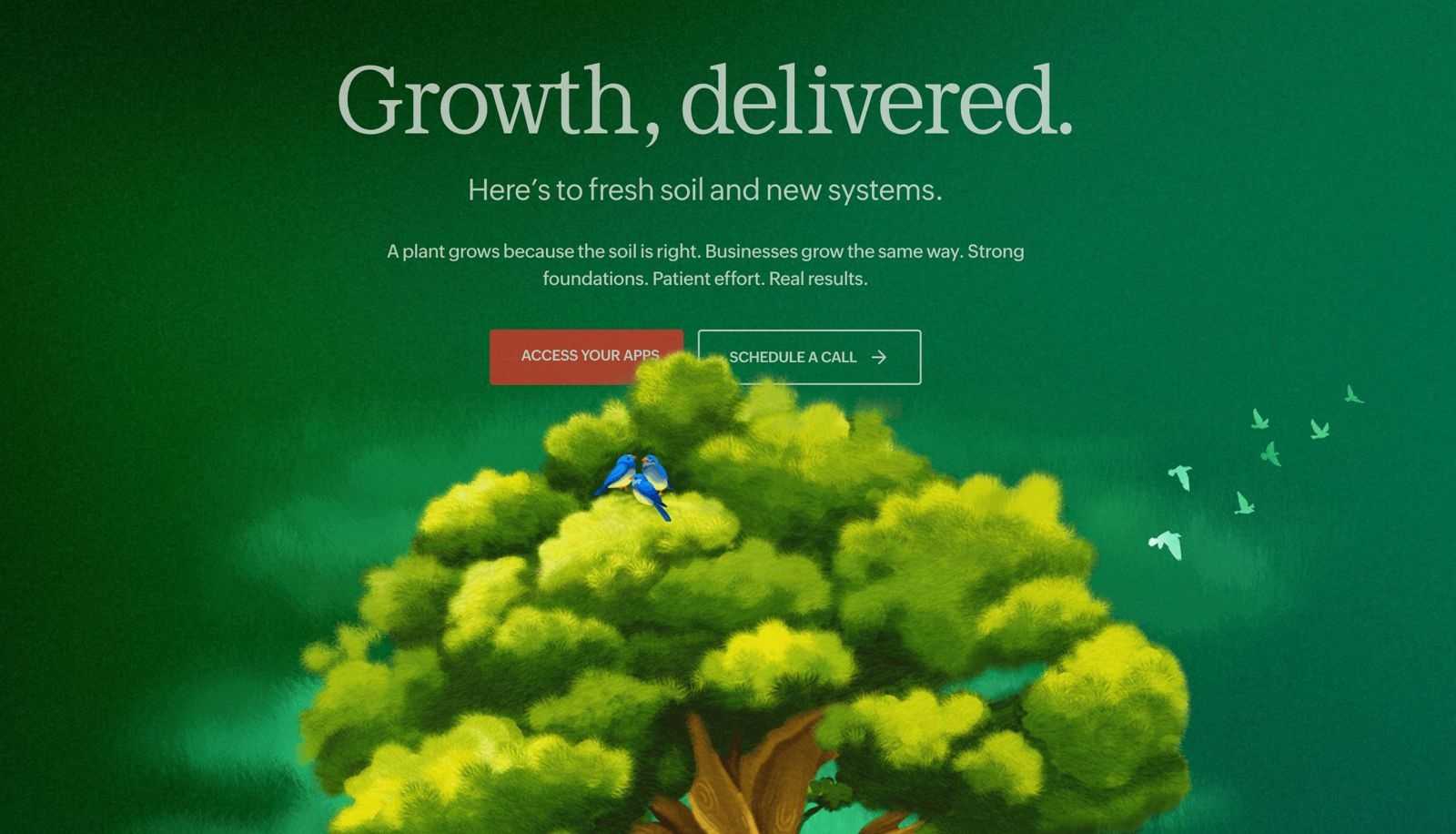
The gesture was intentionally minimal. No calls to action, no timelines, and no expectation of content creation. In doing so, the initiative positioned itself less as a marketing activity and more as a quiet expression of intent.
Letting meaning replace messaging
What makes the initiative stand out is not just the restraint, but how people responded to it.
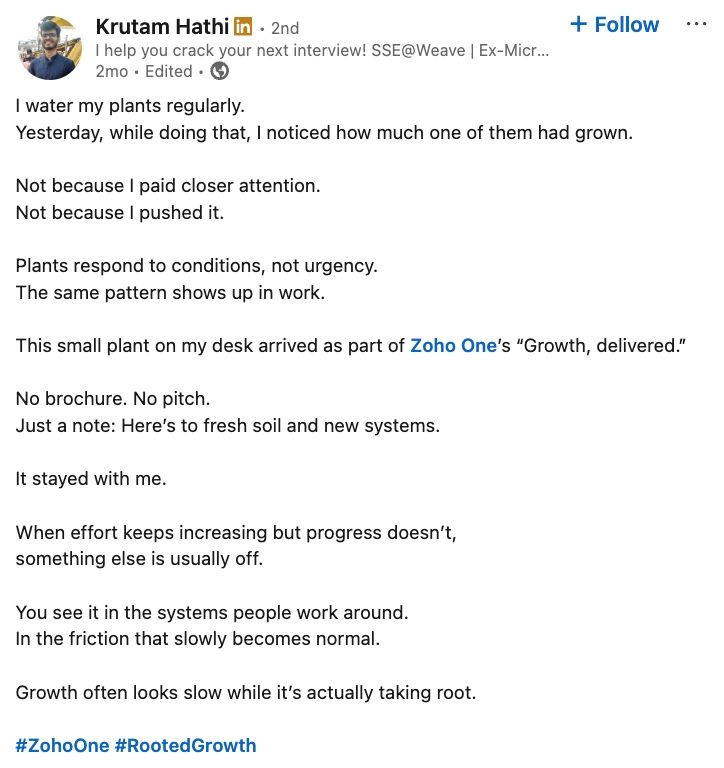
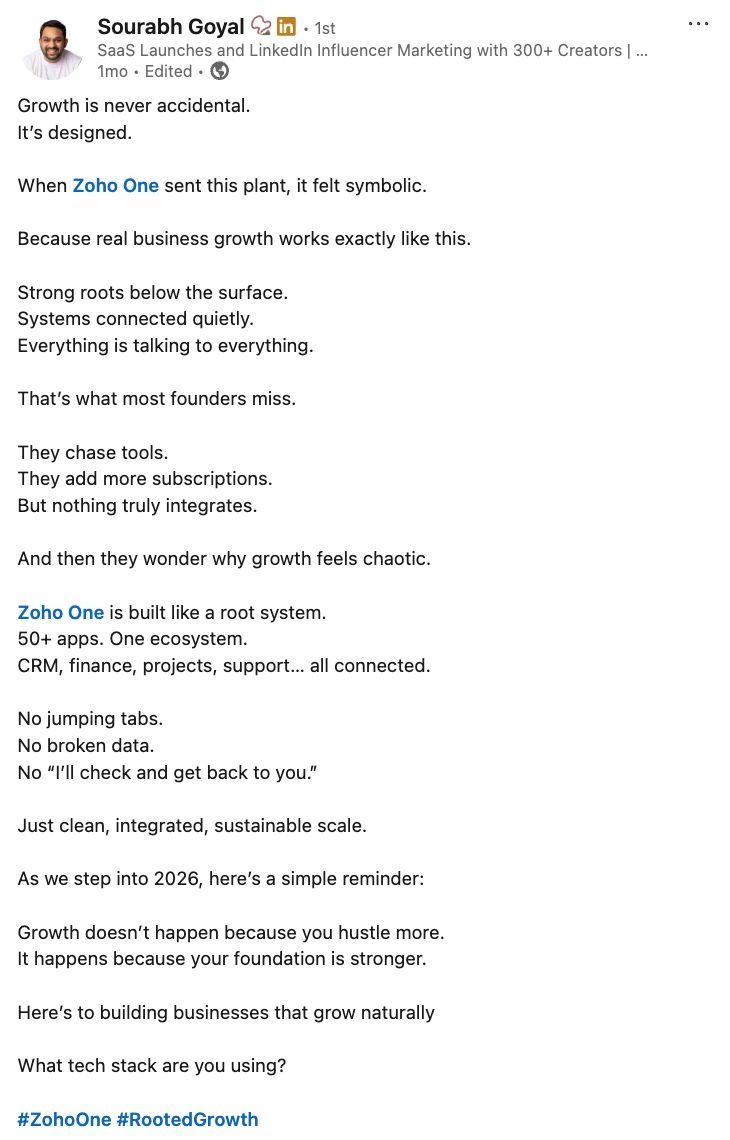
There was no consistent format in how participants chose to share. Some wrote longer, reflective posts on growth and patience. Others shared the plant with minimal context.
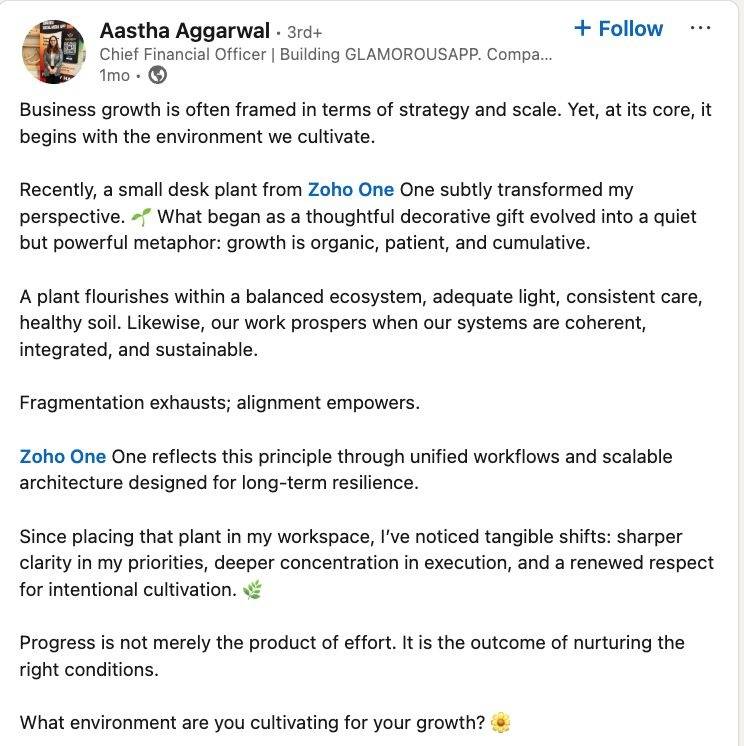
One post described it as:
“A small reminder that growth isn’t always visible, but it’s always happening.”
Instead of reinforcing a single narrative, the initiative allowed multiple interpretations to emerge.
From a marketing perspective, this reflects a departure from tightly scripted campaigns toward a more open, trust-led approach to storytelling.
Translating software philosophy into a physical experience
The desk plant itself serves as a metaphor.
It represents a form of growth that is patient, grounded, and dependent on the right foundation rather than constant expansion. In many ways, this aligns with how Zoho One positions its product—focused on building systems that enable sustainable, long-term growth rather than fragmented scaling.
A shift toward thoughtful, low-noise marketing
The initiative also reflects a broader shift in B2B marketing strategies.
As digital channels become increasingly saturated, brands are beginning to explore quieter, more meaningful ways of engagement. The focus is gradually moving from reach and visibility to relevance and resonance.
Campaigns like “Growth, delivered.” suggest that physical experiences, even small ones, can create more lasting impressions than traditional promotional tactics.
Building through trust, not pressure
At a time when most campaigns are designed to maximise output, Zoho One’s approach stands out for what it chooses not to do. There are no mandatory deliverables, no forced mentions, and no performance expectations.
This introduces an interesting tension.
By traditional metrics, this kind of initiative might appear limited. There is no guaranteed scale, no consistent messaging, and no predictable output.
But that is also what makes it different.
By human measures, it creates space for reflection rather than repetition. Instead of asking people to echo a message, it allows them to interpret it.
Conclusion: rethinking growth through meaningful brand experiences
Ultimately, “Growth, delivered.” shifts the focus from how widely a message travels to how deeply it is understood.
At its core, the initiative communicates a simple idea: growth is not always about doing more, but about building better, with clarity, intention, and the right systems in place.
In a landscape that often rewards noise and speed, this approach brings attention back to sustainability and thoughtfulness. What makes it particularly effective is the restraint it carries. Instead of relying on loud campaigns or heavily amplified messaging, it allows a quiet, physical gesture to carry the weight of the idea.
And in doing so, it highlights something important about modern brand communication: sometimes the most lasting impressions are not created by what is said the loudest, but by what is understood the most naturally.

Follow Startup Story


Related Posts