Tata Steel CEO Stresses Collaborative Efforts for Green Transition in Challenging Industries
- ByStartupStory | August 27, 2023
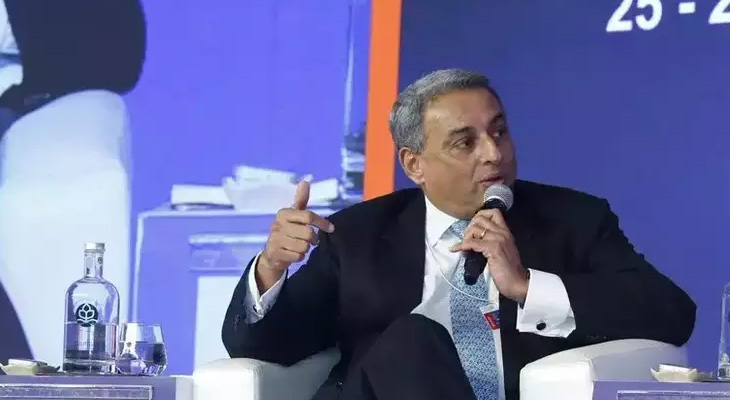
Tata Steel’s CEO and Managing Director, T V Narendran, emphasized that there isn’t a single solution to drive a green transition in challenging industries like steel. He acknowledged the complexity of this task, which requires government backing. Narendran’s remarks are particularly relevant given the global push to reduce emissions and increase reliance on clean energy sources. Steel, being an essential material for various sectors, including renewable energy infrastructure, presents unique challenges in transitioning to sustainable practices.
Speaking at the B20 Summit India 2023, “You need to find a solution, and there is no silver bullet for that… India is alone going to add 100-150 million tonne steel capacity every decade… For the next few decades, you will have these hard-to-abate sectors growing. Cement production is twice the amount of steel production globally… You need to find solutions that are technical, which don’t get solved by just finding another energy source,” he said.
“This journey is going to be significant and we should not underestimate that the industry can support part of the cost… the cost of transition, so needs government support. You need customers to be willing to pay more for green products… It’s a long journey and I think the journey has started in Europe and the US,” he said.
Acknowledging that steel contributes around 8% of the world’s carbon footprint, Narendran emphasized that transitioning requires a supportive policy framework and mechanisms like carbon markets, akin to those in Europe. He shared Tata Steel’s efforts to shift operations in the Netherlands from coal to gas and eventually hydrogen, in line with the nation’s hydrogen consumption goals. In the UK, the focus is on recycling due to the prevalence of scrap materials.
He also said steel accounts for about 8% of the carbon footprint in the world as the industry is growing, particularly in emerging markets.
The transition can happen only if there is a policy framework to support it and carbon markets, which are there in Europe, he added. Speaking on Tata Steel’s operations in the
Netherlands, Narendran said the business there is moving from coal to gas to hydrogen. The transition is important for that nation because Tata Steel Netherlands will become one of the biggest consumers of hydrogen there, noted Narendran. In the UK, it’s different because the operations have a lot of scrap; so it’s about how you recycle that, he said.
Narendran concluded that the journey to sustainability is intricate and necessitates a collaborative effort between industries, governments, and consumers. As steel production continues to grow, particularly in emerging markets, finding viable solutions to reduce its environmental impact becomes increasingly imperative.
Follow Startup Story


Related Posts