Indian Government Launches ‘Bharat 6G Mission’ to Foster 6G Telecom Services with Test Bed Validation
- ByStartupStory | March 23, 2023
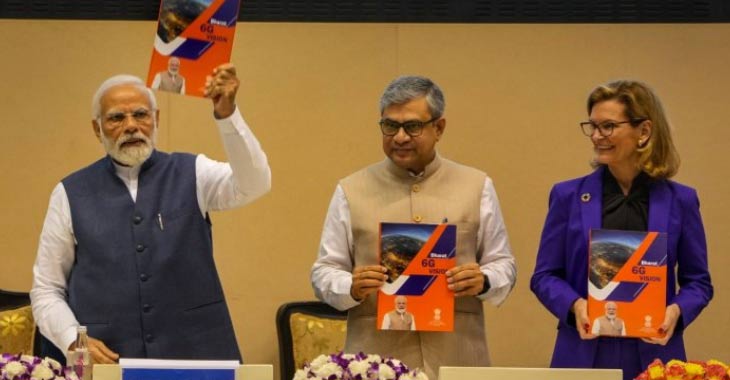
India’s government is gearing up for the next generation of telecom services by launching the ‘Bharat 6G Mission’ and unveiling the country’s first 6G test bed, just six months after the launch of 5G services. Prime Minister Narendra Modi announced the initiative on March 22, and the accompanying vision document outlines a roadmap for the rollout of 6G services in India over the next few years. The test bed will validate new 6G-related technologies, indicating India’s intent to stay ahead of the curve in the telecom sector.
During the inauguration of the International Telecommunication Union’s (ITU) new area office and innovation center in the national capital, Prime Minister Narendra Modi announced the launch of the country’s first 6G test bed and unveiled the ‘Bharat 6G Mission’ document. The test bed will provide academic institutions, industries and startups a platform to experiment with evolving information and communication technologies (ICT). According to Modi, the initiatives will infuse new energy into ‘Digital India,’ offer innovative solutions to the Global South, and create opportunities for homegrown innovators and startups. He added that they will also promote cooperation and collaboration between the IT sectors of South Asian economies.
Indian PM Modi announces plans to set up 500 new 5G labs and work with ITU on standardizing future technologies, including 6G. India has become the world’s biggest exporter of telecom technology and is working with other countries on deploying 5G. The labs will develop India-specific use cases in areas like education, agriculture, intelligent transport systems, and healthcare.

India has established six task forces to oversee the establishment of its 6G vision, which will be implemented through a prospective Mission 6G. The task forces will focus on Multi Platform Next Generation Network, Ecosystem for devices and systems, R&D Finance, Standardisation, Identification of the Spectrum, and Innovative Solutions. Mission 6G will be implemented in two phases from 2023 to 2030, with existing organisational strengths leveraged for maximum efficiency and agility. The research and startup ecosystem will be utilised to bring new ideas to the table, and the Mission will be granted the necessary organisational and financial resources.
Indian government’s vision document on 6G has suggested the creation of a fund worth INR 10,000 Cr to meet the industry’s requirements over the next decade. The document has proposed using various financial instruments, such as grants, loans, VC funds, fund of funds, among others. It has also recommended setting up telecom-focused VC funds and fund of funds for high-risk funding needs and identifying easy-to-implement administrative structures to enable such funds.
India, which was late to adopt 2G, 3G, and 4G technologies, aims to catch up with the world in the race for 5G, and eventually become a leader in setting up 6G standards to sell homegrown products worldwide. This announcement follows Reliance Jio’s expansion of its 5G coverage to 41 more cities, bringing the total to 406, and Airtel’s launch of 5G services in various parts of West Bengal, bringing its current 5G coverage to 260 cities.

Follow Startup Story


Related Posts