Despite risks, Cars24 accelerates its retail business with an eye toward short-term profitability.
- ByStartupStory | January 17, 2023
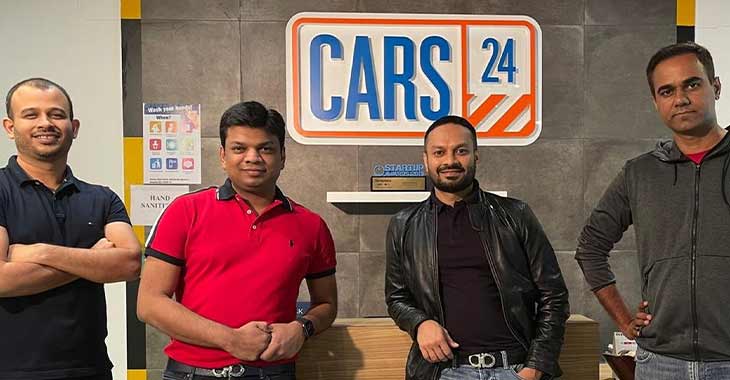
In the next three to five years, Cars24 wants to earn Rs 10,000 crore in income. That goal would need the used vehicle dealer to achieve 10% annual growth over the course of the next five years, or 20% over the course of the following three, given that its present income is estimated to be Rs 6,008 crore. The more ambitious goal of Cars24—profitability in two to three years—seems even more challenging given that the majority of competitors in this sector are now having difficulty achieving it. Cars24’s deficit increased from Rs 191.5 crore to Rs 248 crore even though its sales in FY22 more than quadrupled from Rs 2,775 crore the year before. The company owes success to its product, technological, and marketing efforts, which were primarily made to boost its retail sector.
Spinny, a business established in Gurugram and a direct rival of Cars24, has also observed a similar sales and profit pattern. Despite a 4.5X increase in income to Rs 180 crore in FY22, losses increased by 300%. Cars24 CEO Vikram Chopra seems unconcerned by the commotion surrounding the statistics. In addition to efforts for cash conservation, he claims the company has a “clear plan” to guide the business toward profitability. This plan includes specialist “refurbishment” labs, market expansion, strengthening the financing arm, and investigating new paths of growth.
Vikram anticipates that the India division of Cars24 will begin turning a profit at the EBITDA level within the next two to three years. In an interview, he stated, “Once India starts making profits, it becomes a feeder for us investing in new initiatives.” “We anticipate a solid double-digit year-over-year increase.” From the January-March quarter to the October-December quarter in calendar year 2021, pre-owned car sales at Cars24 increased by 75%. Among the brands that had strong demand were Maruti, Hyundai, Honda, Renault, and Ford. When the company raised $300 million in funding in December 2021, it had a $3.3 billion market value. According to analysts, Cars24 and Spinny together sell 10,000–12,000 used automobiles per month.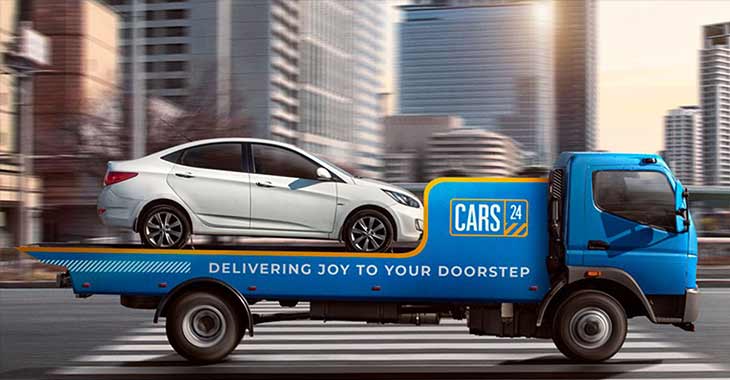
In the last few years, the corporation has slowly shifted its focus toward the retail market as it looks for higher profits. Investors believe that this is a natural step in the company’s corporate progression toward a more lucrative offer.
“Every business has to evolve and look at margin expansion, a larger market size, etc. Cars24 knows that margins are higher in the retail business than in wholesale,” said a private market investor on condition of anonymity.
To be clear, the corporation hasn’t changed from its fundamental business-to-consumer approach. Cars24 works in the B2C and C2B markets. (In the C2B wholesale model, the corporation buys cars mostly from users and resells them to dealers.)
Over the previous two years, Cars24 opened seven refurbishment labs in Delhi-NCR, Ahmedabad, Mumbai, Pune, Hyderabad, Bengaluru, and Chennai in an effort to grow the retail industry. Following treatment at these facilities, clients would pay a premium for the cars. In a blog post from 2021, Cars24 claimed that around 1,500 new jobs for “auto experts” would be created in addition to refurbishing about 20,000 vehicles each month at the labs. However, industry watchers have voiced reservations about the potential ROI of these refurbishment labs.
“Only volumes can make the investment worthwhile,” says an industry insider. “Over a period of time, Cars24 may start acquiring cars irrespective of price or quality, which puts the cost of refurbishment as a big variable. And then connected to it, you have the cost of inventory holding.”
According to a joint analysis by IndianBlueBook and Das WeltAuto, the Indian used automobile industry was estimated to be worth $23 billion in FY2021-2022 and is expected to increase at a CAGR of 19.5% until FY2026-202. According to the research, India sold 4.4 million used cars in FY2021–2022. By 2026–2027, the market is anticipated to reach sales of 8 million units, propelled by factors such the burgeoning middle class and young population, consistent growth in disposable income, and technology-driven transparency, convenience, and transactional ease. The market has a lot of potential for new competitors, but it will be interesting to watch what strategies they use to expand while maintaining profitability.
“Creating separate brands and propositions to serve different price segments could be an interesting play,” suggests Kushal Bhatnagar, Engagement Manager, RedSeer.

Follow Startup Story


Related Posts