From Powering Quick Commerce to Winning the ICC Award
- ByStartupStory | July 3, 2026

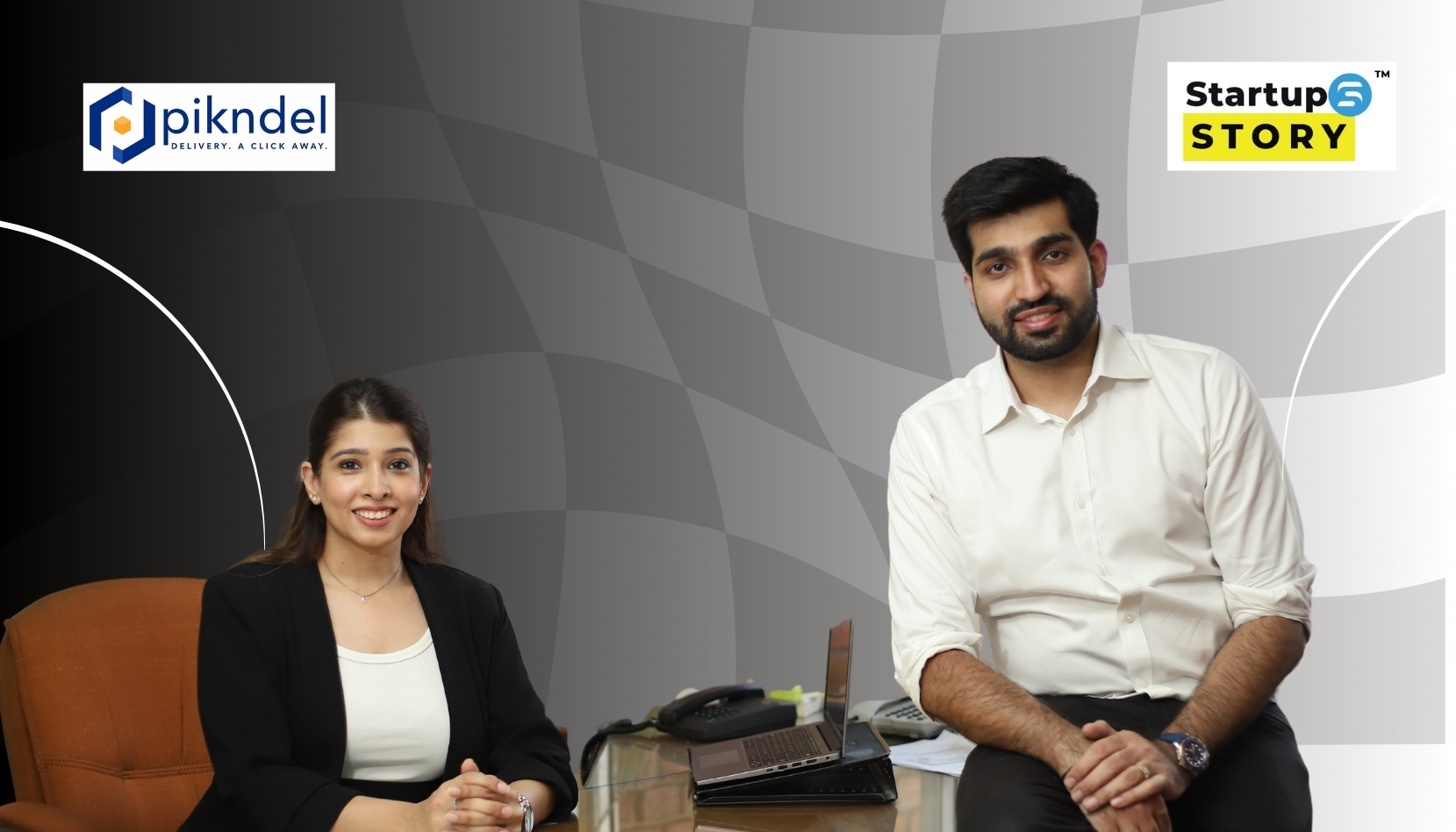
How Siddharth and Tullika Batra Built an Award-Winning Logistics Platform
India’s D2C brands don’t have a product problem. They have a delivery problem.
Every day, thousands of customers discover products through social media, click on a brand’s website, browse the catalogue, add items to their cart, and then leave.
Not because they found a better product. But because another platform promised to deliver it faster. For years, marketplaces and quick-commerce platforms have set the benchmark for convenience, while independent brands have struggled to match the same experience. The result? Brands lose not just sales, but customer relationships, valuable first-party data, and long-term loyalty.
Siddharth and Tullika believed the problem wasn’t marketing. It was an infrastructure.
That belief became Pikndel, a technology-driven logistics platform built on a simple vision: Delivery, A Click Away. Today Pikndel powers over 25,000 deliveries every day across 12+ cities through a growing network of various fulfillment hubs across India. Alongside its next-day and same-day delivery capabilities, the company operates over 20 dark stores that enable 2-hour deliveries, helping D2C brands offer a faster and more seamless customer experience.
The Founders Who Saw What Others Missed
Siddharth Batra, a Chartered Accountant and Indian School of Business alumnus, spent years at KPMG, EY, and BCG before founding Pikndel. Coming from a logistics background, he recognized the infrastructure gap holding back India’s D2C brands and set out to build a platform that could help them deliver faster without losing control of their customer relationships.
Tullika Batra, an experienced entrepreneur in the logistics and supply chain space, brought a complementary blend of strategic thinking, market research, data-driven decision-making, marketing strategy, and team leadership to Pikndel. A Journalism graduate from the University of Delhi and a postgraduate in Mass Communication from SIMC. She began her career in corporate and advertising films before transitioning into logistics. Her journey as a second-time founder gave her first-hand insight into the realities of last-mile delivery and scaling operations, experience that now shapes Pikndel’s customer-first fulfillment model. Together, the founders recognized a challenge that many brands had simply learned to live with.
The Gap That Sparked Pikndel
Customers were discovering products on brand websites but completing their purchases on marketplaces that could promise next-day, same-day, or even 2-hour delivery. Independent brands were investing heavily in product development and customer acquisition, yet losing
conversions because they lacked the fulfillment infrastructure to match those delivery expectations.
As Siddharth explains, the issue wasn’t that brands couldn’t build great products. They simply didn’t have access to the logistics infrastructure needed to offer next-day, same-day, and increasingly, 2-hour deliveries, the new benchmark for customer experience in modern commerce.
Building The Missing Infrastructure Layer
Instead of becoming another delivery company, the founders chose to solve a much bigger problem.
Pikndel was built as a shared logistics and fulfillment infrastructure platform for D2C brands. Rather than requiring every business to invest in multiple warehouses across different cities, the company enables several brands to operate through a network of strategically located fulfillment centres and shared dark stores.
This allows brands to keep inventory closer to customers, reduce operational costs, minimize inventory fragmentation, and significantly shorten delivery timelines, all while continuing to sell through their own websites instead of relying entirely on marketplaces.
The philosophy is simple: Fast delivery shouldn’t be a privilege reserved for the largest companies. It should be an infrastructure that every growing brand can access. Designed around a growing network of 20+ dark stores across India, Pikndel’s infrastructure is built to enable two-hour deliveries, bringing inventory closer to customers while allowing brands to fulfil orders faster without the burden of setting up dedicated warehouses in every city.
Where Strategy Meets Execution
While Siddharth focuses on the long-term vision of transforming India’s commerce infrastructure, Tullika leads the operational engine that makes that vision possible.
From fulfilment centres and warehouse operations to inventory management and last-mile logistics, she has played a key role in designing systems that can scale without compromising efficiency or customer experience. Her emphasis on operational excellence has helped Pikndel build a logistics network capable of supporting thousands of deliveries every day while maintaining consistent service standards.
For the founders, scaling has never been about opening more locations as quickly as possible. Instead, every new city follows a repeatable operational framework powered by technology, process automation, and data-driven inventory planning, allowing the company to grow sustainably.
Powering The Next Generation of Commerce
Today, Pikndel operates across more than 12 cities through a growing network of various fulfillment hubs, including a 20+ and growing dark stores network that powers its 2-hour delivery service. Alongside its next-day and same-day delivery offerings, the company facilitates over 25,000 deliveries every day. Backed by investors including 100X.VC, Anay Ventures, Venture Catalysts, VC Grid, Breathe Capital, D2C Insider Angels, Atrium Angels and several renowned angel investors, Pikndel continues to expand the infrastructure powering India’s rapidly evolving D2C ecosystem.
Yet, for Siddharth and Tullika, those milestones represent only the beginning.
Their vision extends beyond expanding into more cities. By growing Pikndel’s network of dark stores and strengthening its technology-led fulfillment infrastructure, they aim to make two-hour delivery a reality for more D2C brands across India, helping them compete on customer experience while continuing to own their customer relationships. As commerce continues shifting toward faster fulfillment, they believe the future won’t belong only to companies that build better products. It will belong to those that can deliver them better.
By building the infrastructure layer India’s commerce has long been missing, Pikndel is enabling a future where D2C brands can own their customer relationships without compromising on delivery speed.
Also Read

Follow Startup Story


Related Posts