
Delivery On Time: From Lockdown-Era Grocery Deliveries to a Fast-Growing EV Logistics Network
- ByStartupStory | June 29, 2026
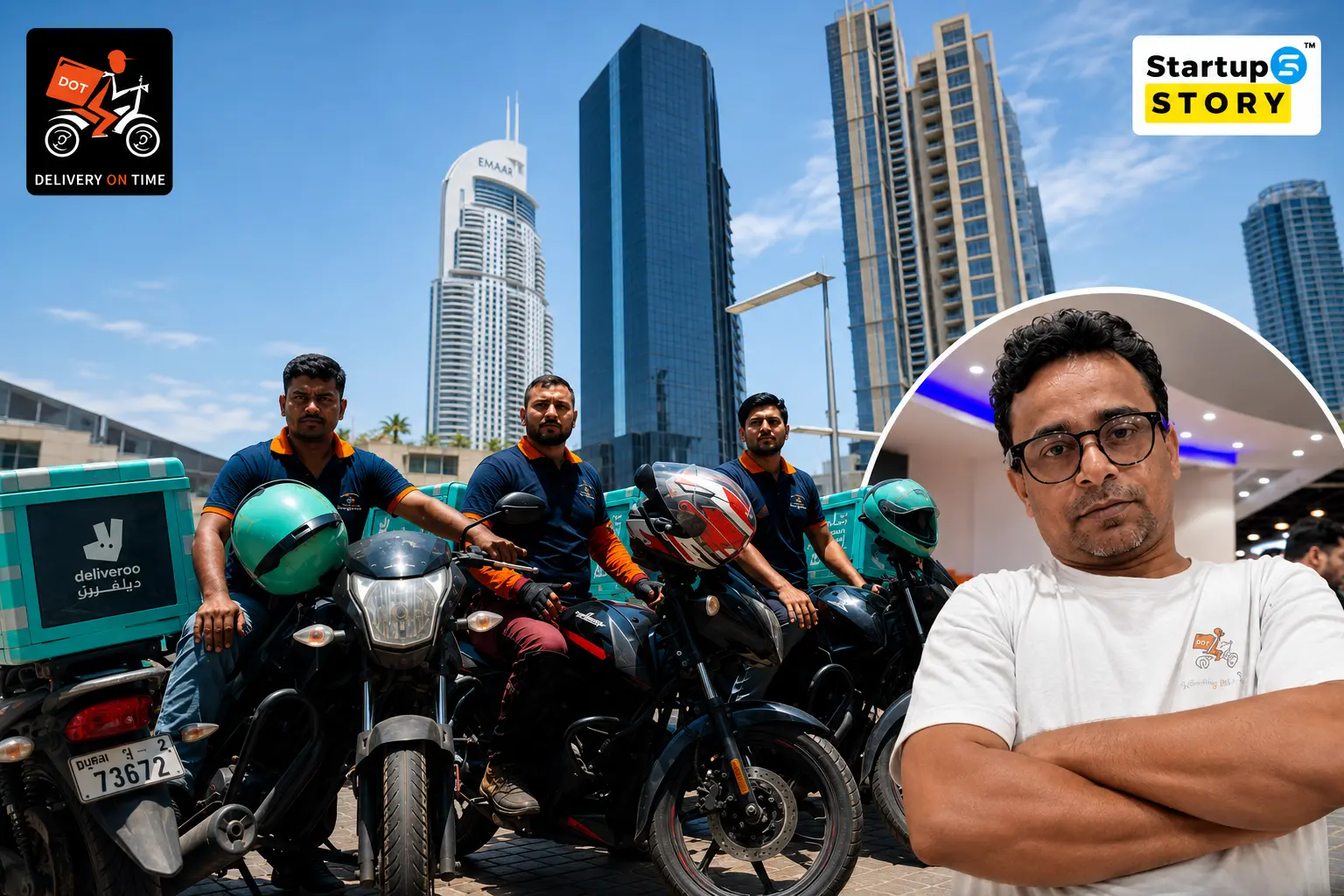
In 2020, while most businesses were shutting their doors, Md Sanawar and Rias Parvin were opening one. The country was in lockdown, local supply chains were breaking down, and grocery shelves in pockets of Kolkata were going unstocked for days at a time. The duo started Delivery On Time with a modest fleet of 20 riders, taking grocery and essential orders over WhatsApp for communities that had nowhere else to turn.
There was no app, no funding round behind them, and no real roadmap beyond one promise: get people what they needed, on time, every time.
Sanawar’s own path into logistics had started years earlier. A school dropout, he began as a gig rider for Blue Dart back in 2017, learning the business from the ground up, one delivery at a time. That experience taught him exactly where the industry’s cracks were, and it is what gave Delivery On Time its instinct for solving problems other logistics players were content to ignore.
A Market Built on Fragility
By 2021, with the worst of the lockdown behind them, Sanawar and Parvin turned their attention to a gap they had noticed while delivering essentials: Home Bakers and Bakery businesses had no dependable way to move fragile products like cakes and gifting items across the city. The baking industry itself is enormous, a billion-dollar category by most estimates, but its products are uniquely vulnerable. A cake that survives hours of careful piping and detailing can be ruined in minutes by a pothole or a sharp turn, and once it is damaged, there is no fixing it on the way to the customer.
“The baker bakes with love and passion, and behind every intricate design is hours of practice. The effort goes to waste if the cake is spilled on the way,” Sanawar has said of the problem they set out to fix.
For a customer ordering a cake for a birthday or anniversary, a damaged delivery is not a minor inconvenience, it is a ruined occasion.
Redesigning Last-Mile Logistics for Fragile Deliveries
DOT’s answer was not a new app feature or a marketing promise. It was a change in how the delivery itself worked.
Every fragile-item order now travels with two people instead of one: A rider focused entirely on the road, and a dedicated pillion agent whose only job is to keep the product steady and intact. Customers can request a photo on arrival, sent straight from the agent to the baker, confirming that what left the kitchen is exactly what reached the doorstep. It is a small operational tweak, but it solved a trust problem that the rest of the industry had largely chosen to live with.
Building the EV Backbone
While the cake-delivery vertical built DOT’s reputation, the company was quietly assembling a second, much larger business: EV-focused last-mile logistics for e-commerce, quick-commerce, and food delivery partners who needed fleet capacity without the overhead of owning one.
DOT now runs an EV fleet of roughly 650 vehicles, sourced through partnerships with brands including Ola Electric and a network of 10 to 20 local vendors who supply two-wheelers on rental terms. Fast-charging support is built directly into the model, keeping riders on the road for longer stretches and cutting into the downtime that typically erodes delivery turnaround times.
The fleet’s biggest concentration sits in Kolkata, home to roughly 400 of those vehicles, with Siliguri and Delhi making up the rest of the footprint. Beyond its own fleet, DOT also taps into a far wider gig network, combining EV and petrol riders, that runs over 48,000 strong across India. That network gives partner businesses flexible access to delivery capacity on demand, without each one needing to build a fleet of its own from scratch.
The Road Ahead: Scaling a Sustainable Logistics Network
For two people who once ran their entire operation off a single WhatsApp number, the road ahead now looks remarkably bigger. Sanawar and Parvin talk about growing the EV fleet, but also about something more personal, giving women home entrepreneurs in the baking world they already serve a real shot at building income on their own terms. There’s talk of an IPO too, and a target of crossing 900 crore in revenue within five years, numbers that matter less for what they prove today than for how far the founders believe this can still go.
But underneath the targets, what’s really driving DOT hasn’t changed much since 2021. It’s the same instinct that once sent a second rider along just to keep someone’s cake from tipping over, now scaled up to a whole country’s last mile.
Twenty riders have become 650 EV vehicles. A WhatsApp number has grown into a network of 48,000 riders strong.
It’s a long way from a cake that arrives in one piece to a company that goes public, but DOT seems to be betting it can close that distance the same way it built everything else, one delivery at a time.

Follow Startup Story


Related Posts