Chinese University Launches Undergraduate Embodied AI Major
- ByStartupStory | December 1, 2025
Shanghai Jiao Tong University Pioneers World’s First Program Amid Humanoid Robotics Boom
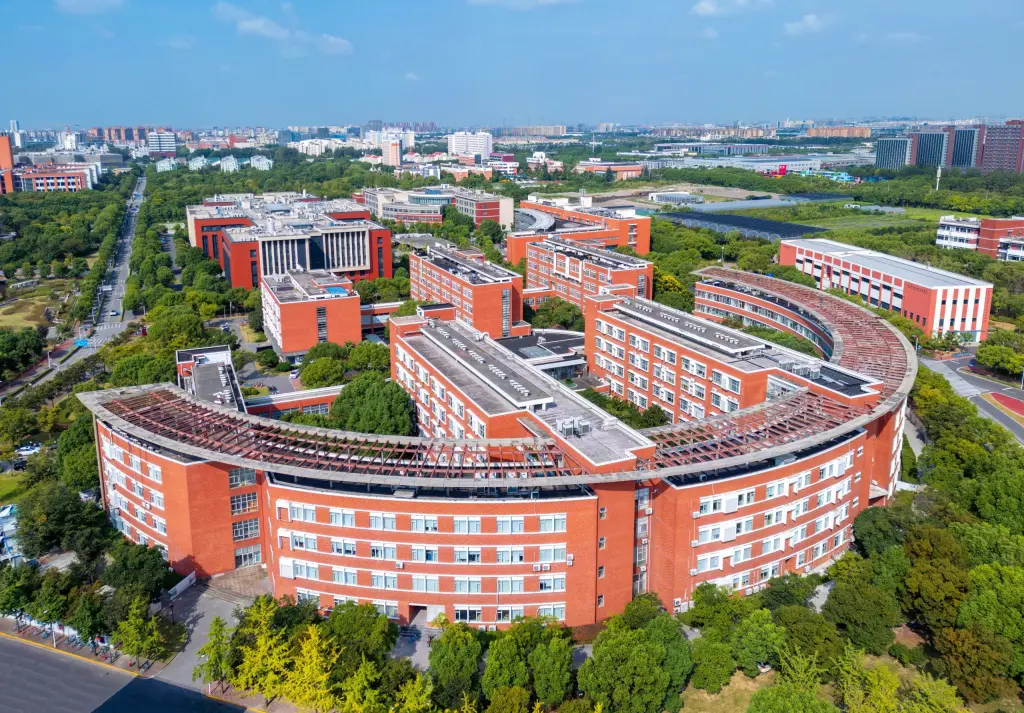
Shanghai Jiao Tong University (SJTU) has launched China’s—and reportedly the world’s—first undergraduate major in embodied artificial intelligence, a four-year engineering program under its School of Artificial Intelligence. Enrolling 30 students in its inaugural fall 2025 cohort, the curriculum addresses acute talent shortages in humanoid robotics by training specialists across perception, decision-making, control, and physical design. Housed within SJTU’s cutting-edge research ecosystem, the major draws on partnerships with Huawei and the National-Local Joint Innovation Center for Humanoid Robots to bridge academic theory with industrial deployment.
Full-Chain Training For Robotics Specialists
The program spans foundational AI, robotics engineering, mechanical design, and embodied intelligence, equipping graduates to develop intelligent agents interacting with physical environments. Courses integrate multi-modal perception (vision, touch, proprioception), reinforcement learning for decision-making, motion planning/control, and hardware-software co-design for dexterous manipulation. Students access SJTU’s internal platforms—including advanced simulation labs and humanoid testbeds—for hands-on projects mirroring real-world challenges like bipedal locomotion and object grasping.
SJTU positions embodied AI as the next frontier beyond large language models, emphasizing physical embodiment for applications in manufacturing, eldercare, disaster response, and space exploration. The university cited China’s humanoid robotics sector—valued at RMB 200 billion with 1,000+ firms—as demanding hybrid talent blending algorithms, mechanics, and ethics.
Government Push Fuels Talent Pipeline
The launch aligns with Beijing’s “low-altitude economy” and robotics priorities under the 14th Five-Year Plan, targeting 180,000 annual drone/robot production by 2028. Recent policies eased airspace restrictions and offered RMB 15 million incentives for certified eVTOLs/humanoids, spurring investments from XPeng, EHang, and Unitree.
SJTU’s move responds to global competition: U.S. universities like Carnegie Mellon offer robotics PhDs, but undergraduate embodied AI remains rare. China’s “engineer dividend”—producing 4.7 million STEM graduates yearly—positions it to lead, with SJTU aiming for 100+ enrollees by 2027.
Industry Partnerships And Career Prospects
Collaborations provide practice bases for capstone projects: Huawei contributes AI chips/sensors, while the Joint Center offers humanoid prototypes for testing. Graduates target roles at Xiaomi CyberOne, UBTech Walker, or international firms like Boston Dynamics, with starting salaries exceeding RMB 500,000 amid 30% talent gap.
Curriculum incorporates ethics, safety standards (ISO 13482), and interdisciplinary electives in neuroscience/bio-mimicry, fostering “human-compatible” AI.
Broader Context And Global Race
This debut signals China’s maturation in embodied AI, building on Tsinghua/Peking’s AI undergrads and HKUST’s robotics tracks. Globally, embodied intelligence powers Tesla Optimus and Figure 01, projected at $38 billion market by 2035 (McKinsey).
Challenges persist: high failure rates in dexterous tasks, energy constraints, and safety certification. SJTU mitigates via simulation-to-real transfer and data-efficient learning.
The major cements SJTU’s leadership—home to 20+ IEEE fellows and AlphaGo contributors—training pioneers for China’s robotics dominance. As humanoid factories emerge in Guangzhou/Shenzhen, embodied AI undergrads represent Beijing’s long-game bet on physical intelligence reshaping economies.

Follow Startup Story


Related Posts