Pony.ai to triple robotaxi fleet globally by 2026
- ByStartupStory | November 30, 2025
Gen-7 Platform Hits Profitability Milestone As Asset-Light Model Fuels Aggressive Scaling
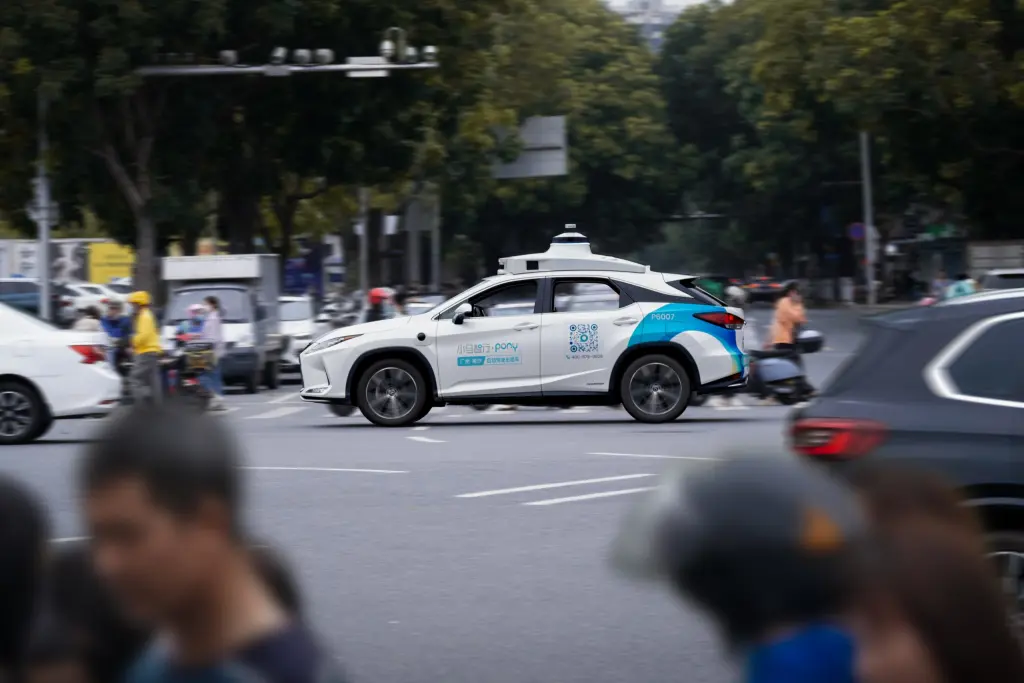
Guangzhou-based autonomous driving leader Pony.ai has unveiled ambitious plans to triple its global robotaxi fleet to over 3,000 vehicles by the end of 2026, building on its seventh-generation (Gen-7) platform achieving city-wide unit economics breakeven in Guangzhou just two weeks after commercial launch. Currently operating 961 robotaxis—up from 270 at the end of 2024—the company remains on track to surpass its 1,000-unit year-end target, signaling accelerated momentum in China’s fiercely competitive robotaxi race. This expansion coincides with Pony.ai’s first post-IPO earnings, where Q3 2025 revenue jumped 72% year-over-year to $25.4 million, driven by 89.5% growth in robotaxi services to $6.7 million and doubled licensing revenue to $8.6 million.
Gen-7 Robotaxi Validates Scalable Economics In Real-World Deployment
The Gen-7 robotaxi, mass-produced in partnership with BAIC Group’s Arcfox and GAC Aion, has delivered 667 units to date, with vehicles in Guangzhou averaging 23 daily orders amid robust user demand and optimized pricing. This rapid ramp-up underscores Pony.ai’s shift toward sustainable operations, where fare revenue surged over 200% year-on-year in tier-1 cities like Beijing, Shanghai, Guangzhou, and Shenzhen. Gross margins improved to 18.4% from 9.2% a year earlier, reflecting efficiencies in autonomous driving kits (ADK) and operational workflows.
Pony.ai’s Virtual Driver technology powers fully driverless commercial services across these hubs, with the Gen-7 model featuring a 20% bill-of-materials cost reduction planned for 2026 production. CEO James Peng emphasized that Guangzhou’s breakeven—covering all operating costs including depreciation—lays a “strategic foundation for scalable domestic and international expansion,” positioning the company to capture rising ride-hailing demand as regulatory approvals expand.
Asset-Light Partnerships Unlock Capital-Efficient Growth
Central to Pony.ai’s tripling strategy is its innovative asset-light model, exemplified by recent deals with Sunlight Mobility and Shenzhen Xihu Co. Under these arrangements, partners fund vehicle acquisition and deployment while Pony.ai supplies the autonomous software via licensing, minimizing capex and focusing resources on R&D. Sunlight Mobility’s initial Guangzhou fleet rollout before year-end 2025 will expand nationwide, with more third-party operators signaling market validation of this approach.
This structure enabled Pony.ai to raise $800 million+ through its dual Nasdaq-Hong Kong listing earlier in 2025, directing proceeds toward Gen-7 enhancements and global pilots. Cash reserves stood at $588 million as of September 30, supporting fleet growth without diluting economics. The company anticipates further BOM reductions and higher utilization rates as networks mature.
Global Ambitions Target Eight Markets Including Uber And Bolt Integrations
Beyond China, Pony.ai eyes expansion into eight countries through ride-hailing partnerships with Uber and Bolt, plus local operators in Qatar and Singapore. These moves leverage regulatory progress in robotaxi testing abroad, where Pony.ai’s Nasdaq listing (PONY) provides credibility for international scaling. Domestically, it trails Baidu’s Apollo Go—boasting 250,000 weekly driverless orders—but leads in commercial robotaxi revenue growth.
The Q3 report highlighted robotruck licensing as a second engine, with $10.2 million from self-driving trucks developed alongside SANY, targeting thousand-unit mass production in 2026. Non-GAAP net losses widened to $55 million amid heavy investments, but improving unit economics signal a path to profitability as fleet density rises.
Competitive Landscape And Investor Implications
Pony.ai’s goals intensify rivalry with Baidu, WeRide, and AutoX in China, where robotaxi orders have exploded amid policy support for L4 autonomy. Globally, Tesla’s Cybercab unveiling and Waymo’s U.S. dominance add pressure, but Pony.ai’s hybrid OEM partnerships and asset-light pivot differentiate it for rapid scaling. Shares rose over 6% post-earnings, reflecting optimism despite a 30% slide from Hong Kong IPO highs.
As Pony.ai triples to 3,000+ vehicles, it bets on network effects: higher density yields better routing, safety data, and rider retention. With $7 trillion projected for autonomous mobility by 2050, this expansion cements Pony.ai’s leadership in Asia’s robotaxi frontier, blending Chinese manufacturing prowess with global software deployment. Success hinges on sustaining breakeven economics at scale, but early Guangzhou wins and partner momentum position it strongly for 2026 dominance.

Follow Startup Story


Related Posts