
In FY22 Licious’ revenue increased by 64% while losses surpassed Rs 855 Cr
- ByStartupStory | November 22, 2022

Licious, a direct-to-consumer (D2C) meat and seafood company, raised more than $390 million over the course of four investment rounds in FY22 to become India’s first unicorn in its industry. Utilizing these resources, the company expanded its scope and came close to reaching the Rs 700 crore revenue threshold in the most recent fiscal year. According to Licious’ annual financial statements filed with the Registrar of Companies, its operating revenue increased by 64.3% in FY22 to Rs 682.6 crore from Rs 415.5 crore in FY21. 97.5% of the total operational income came from the sale of meat, seafood, eggs, and other products. From Rs 403.6 crore in FY21 to Rs 665.7 crore in FY22, these receipts increased by about 65%. Additionally, the company received Rs 16.9 crore in delivery fees in FY22, an increase of 42%.
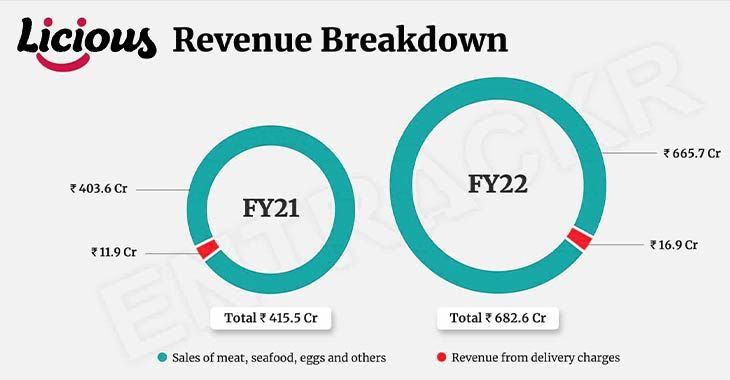
In addition, Licious reported non-operating income of Rs 23.5 crore, which included interest on bank deposits and current investments and increased total revenue for FY22 to Rs 706 crore. Having developed a farm-to-fork business model since its founding in 2015, Licious also manages the entire back-end supply chain. It began operating in 25 cities early last year, including Bengaluru, Delhi (NCR), Mumbai, Hyderabad, and Chandigarh. It also entered the ready-to-eat market.
When it comes to costs, raw commodities including meat, poultry, and seafood items stood up as the largest component, accounting for 46.5% of the whole budget. In FY22, this expense increased 74.3% to Rs 554 crore.
In FY22, spending on employee benefits increased 76% to Rs 209.5 crore. Costs for advertising, promotions, and shipping and delivery increased by 2.6X and 2.3X, to Rs 170 crore and Rs 65.2 crore, respectively. During the same time period, the company also spent Rs 24.42 crore on information technology.
In FY22, Licious’ overall costs increased by 85.5% to Rs 1,191 crore, while its losses increased by 2.3X to Rs 855 crore. During FY22, cash outflows from operations increased by over 2X to Rs 416 crore from Rs 200 crore.
In terms of ratios, the EBITDA margin declined to -62.72% throughout the course of the year, which could be attributed to an increase in expenses of almost 85%. During FY22, the company invested Rs 1.74 for every rupee of operating revenue. Despite the company having a significant impact on the category, the metrics for a Unicorn don’t seem all that promising. That is caused by two things. Pricing and retaining customers. Licious costs far more than offline markets, which makes the sustainability of its clientele very dubious. The company has shown some actual innovation and category extension with its spreads in the past and the meat and masala biriyanis in the present, despite the lack of a segment-wise break up being provided. While it has undoubtedly proven many critics incorrect, most notably those who laughed at people who bought meat online in large enough quantities, it may soon discover that the largest meat processors in the nation have discovered the next stage of growth. outside of the nation.

Follow Startup Story


Related Posts