
3D printing tech to help in the fight against COVID-19
- ByStartupStory | September 11, 2021
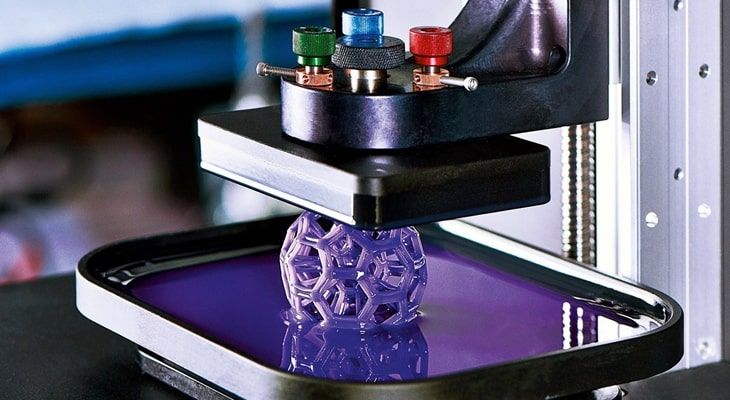
3D-printed origami technology, a distinctive art form, is utilized by researchers in Simon Fraser University’s Additive Manufacturing Lab to aid in the fight against COVID-19, and help doctors to identify and diagnose various health conditions.
It is a low-cost, portable 3D-printed ventilator, driven by a patented, intelligent 3D-printed origami tube. An in-depth overview of the design and development of the innovation, recently evaluated by a local team of respiratory therapists, has been published in the journal Flexible and Printed Electronics.
The portable mechanical ventilator is designed to assist a person’s breathing by reliably contracting a 3D-printed origami tube, rather than compressing a conventional bag-valve-mask (BVM), which reduces the overall size of the assisted breathing machine with mechanical strength gain. The 3D-printed design and lightweight materials also lower production costs.
“This technology is useful for treating COVID-19 patients or patients who need a compact and transportable device outside of hospital settings, such as long-term care homes or in remote rural areas and developing countries, ” said SFU School of Mechatronic Systems Engineering’s associate professor Woo Soo Kim.
The team has partnered with Vancouver-based ventilator manufacturer Pantheon Design and Delta-based 3D-printing company Tinkerine, with support from the Alliance program of the Natural Sciences and Engineering Research Council of Canada (NSERC). The team is also seeking further investment and development partners with the goal of mass production.
Developing 3D origami-based dry electrodes for sensing robots to assist healthcare professionals
Kim is also developing and patenting 3D origami dry electrodes that can be used to monitor patient health. This technology is under the same intellectual property strategy as 3D printed origami technologies. The dry electrodes can detect and monitor physiological signals, such as heartbeat, breathing, temperature, and muscle movements.
In the future, Kim envisions that this technology could be used to assist doctors and nurses by allowing them to assess patient’s health remotely through a robot helper. The humanoid robot would also be able to monitor oxygen levels – useful in cases where a patient has developed severe COVID-19. The data can be viewed in real-time on the robot’s monitor or sent directly to the healthcare provider.
“The dry electrode doesn’t need to be equipped with the sensing robot – it can be used in a hospital setting to replace the wet gel type electrode for electrophysiology such as electrocardiogram or blood pressure measurement applications,” Kim says. “Dry electrodes are just one of the technologies under this portfolio of 3D origami technologies we are developing here at SFU.

Follow Startup Story


Related Posts