
UK AI infrastructure startup Callosum challenging AI Silicon Valley “monoculture” comes out of stealth
- ByStartupStory | February 26, 2026

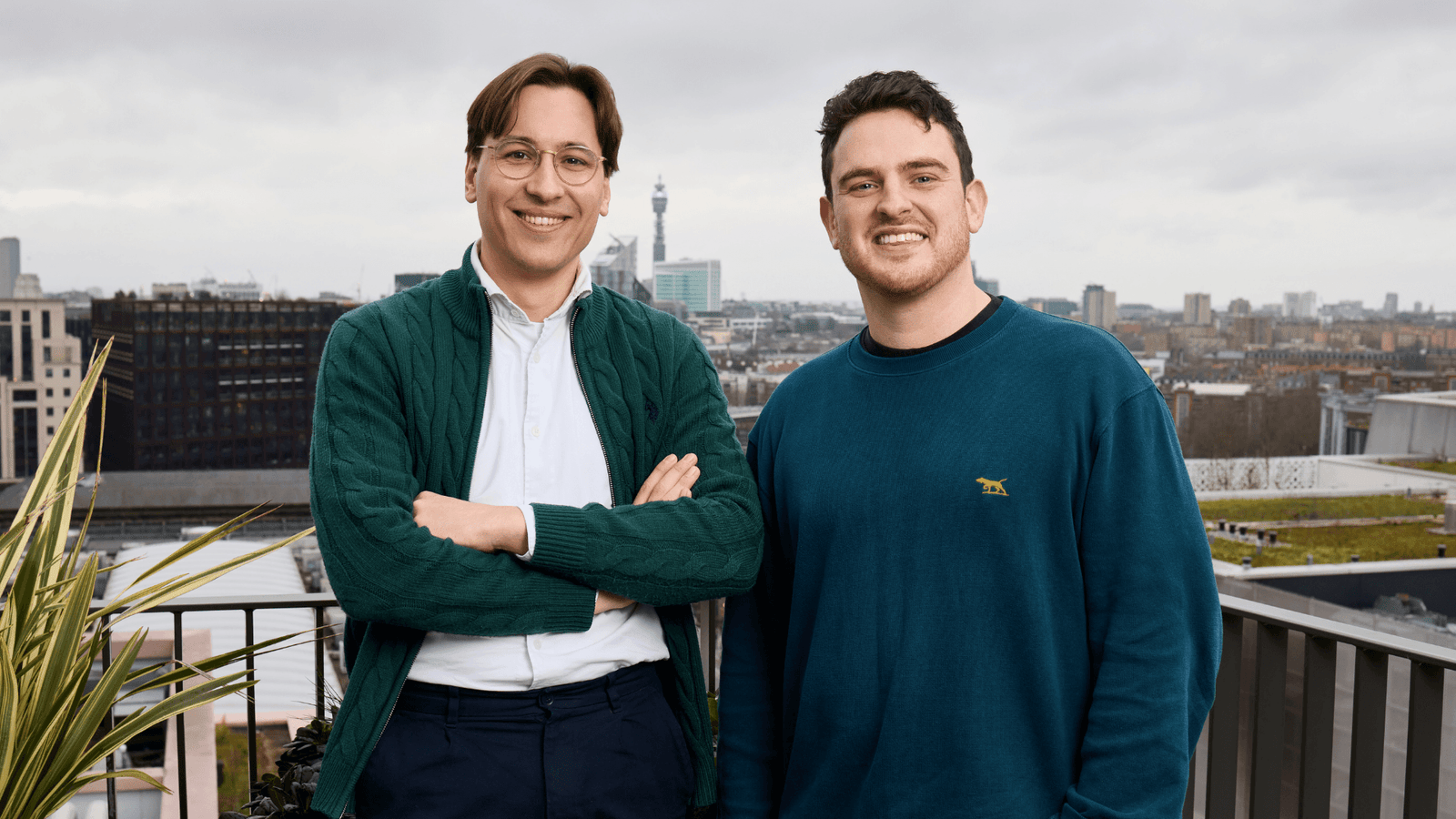
Callosum is building software that enables different AI models to work together across chips from different manufacturers.
A UK AI infrastructure startup founded by Cambridge neuroscientists offering a counter view to the “monoculture” that believes superintelligence will come from a single “God-like” AI model running on identical chips has come out of stealth, raising over $10m in funding.
Called Callosum, the startup has raised $10.25m from European VC Plural and ARIA (the Advanced Research and Invention Agency), the UK government body charged with unlocking scientific and technological breakthroughs, along with several angel investors.
Callosum is building software that enables different AI models to work together across chips from various manufacturers, saying it makes it “faster” and “cheaper” to solve hard, real-world problems at scale.
The UK startup is also making a play about its sovereign credentials amid the global AI race.
It says: “Rather than forcing every task onto identical hardware, its platform orchestrates components into a system that interacts, communicates and collaborates, reducing dependence on any single provider.”
Callosum is challenging the assumption that AI development and greater intelligence will come through scaling a single AI model on identical chips, a process which demands high energy and capital costs and concentrates power in the hands of the likes of Nvidia, OpenAI and Anthropic.
The startup points out that real-world problems are heterogeneous, complex and require different capabilities.
It points to the example of the human brain saying it didn’t develop by copying one neuron billions of times but evolved to be efficient, flexible and resilient by combining many different types of cells, signals and specialised circuits.
Callosum believes the future of AI, like the brain, won’t rest in running bigger models on more of the same chip, but with different models optimised as a system, running across different chip types.
It says tech is bearing fruit, saying it is more accurate and better performing than rivals.
The startup was founded by Danyal Akarca and Jascha Achterberg, who met during their PhDs at Cambridge University, working on the intersection of the brain, computing and AI.
Their research has been published in several Nature journals and the founders have collaborated with Google DeepMind.
Akarca said: “Big labs are currently betting that one model will rule them all. We think that’s wrong and our work proves this. Nature shows that real intelligence emerges from many systems working together.
“We’ve brought together incredible talent to enable a paradigm shift in how we build intelligent systems to solve real-world problems, with the infrastructure to make that possible, on any chip, anywhere in the world.”
Achterberg said: “Everyone assumed chip diversity was a disadvantage to be managed. We saw the opposite, that it’s an advantage to be exploited.
“We’re not optimising one algorithm on top of the existing stack. We’re using software to control all the levers across the entire system, extracting benefits from diversity that others dismiss. Plural understands this mission and we’re excited to build alongside them.”
The startup says it will use the funding to expand its London-based team and scale its software. The startup will be using ARIA’s new test lab for startups to prove their AI chips can compete against Nvidia. ARIA is committing £50m to the facility, called the Scaling Inference Lab. The lab aims to provide a shortcut to commercialise new technologies.


Follow Startup Story


Related Posts