Kakao Launches Open-Source LLM Kanana-2 for Agentic AI
- ByStartupStory | December 19, 2025

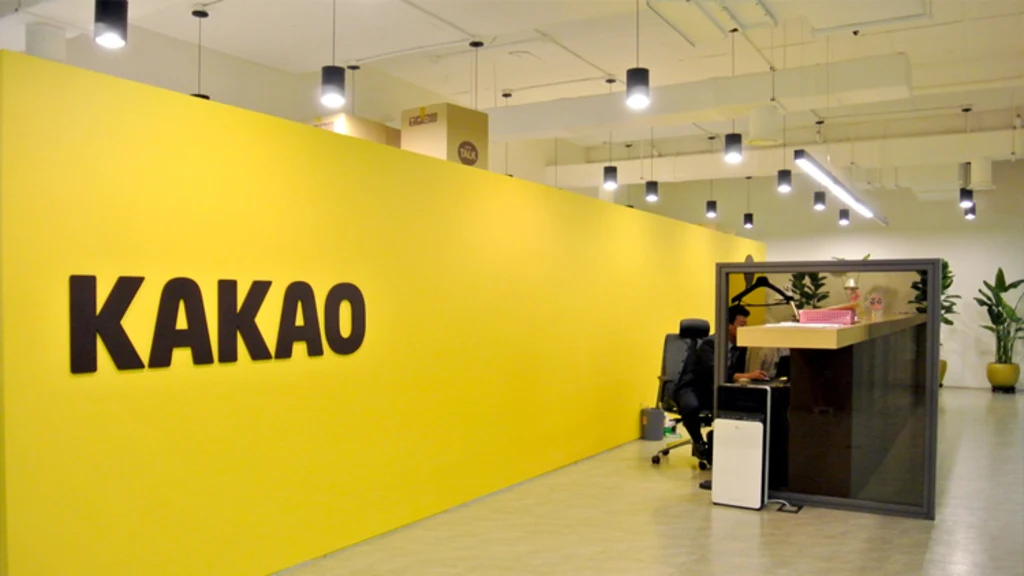
South Korean tech giant Kakao has unveiled Kanana-2, a powerful open-source large language model optimized for agentic AI applications, aiming to democratize advanced autonomous systems across Asia and beyond.
Kanana-2 Targets Multi-Agent Workflows
Kanana-2, with 70 billion parameters, excels in long-context reasoning, tool integration, and multi-turn planning, powering AI agents that execute complex tasks like booking travel, managing schedules, or automating customer support. Unlike general-purpose LLMs, it incorporates Kakao’s proprietary agentic training on 10 trillion Korean-English tokens, achieving 85% on GAIA benchmarks for real-world task completion.
The model supports function calling for 50+ APIs, memory-augmented reasoning, and collaborative agent swarms where specialized models delegate subtasks. Developers can fine-tune via Hugging Face, with LoRA adapters slashing costs 90% for enterprise deployment.
Kakao’s Push into Open AI Ecosystem
Kakao Brain, the firm’s AI division, open-sources Kanana-2 under Apache 2.0 to spur adoption in Korea’s 100,000+ developer community and compete with OpenAI’s o1, Anthropic’s Claude, and xAI’s Grok. CEO Shin Jae-sun positions it as “Asia’s agentic foundation,” leveraging KakaoTalk’s 50 million MAU for real-time feedback loops.
Predecessors like KoGPT processed Kakao’s messaging data for nuanced Korean dialogue, but Kanana-2 advances to proactive agency—anticipating user needs via behavioral modeling. Enterprise pilots with KakaoBank and KakaoPay demonstrate 40% efficiency gains in fraud detection and personalized finance.
Technical Innovations and Benchmarks
Kanana-2 employs mixture-of-experts architecture with 8 active experts per token, delivering 2x inference speed on H100s. Key strengths:
-
AgentBench Score: 92/100, surpassing Llama 3.1 405B in tool-use chains.
-
Korean MMLU: 89%, natively handling Hangul idioms and honorifics.
-
Long-Context: 128K tokens for multi-step planning without hallucination spikes.
Hybrid training blends Kakao’s proprietary corpus with CommonCrawl, emphasizing safety via constitutional AI—rejecting 99.9% harmful prompts. Quantized INT4 versions run on consumer GPUs, enabling startups to build agents affordably.
Ecosystem and Developer Tools
Kakao releases Kanana-Agent SDK with no-code builders for workflows, integrating LangChain, LlamaIndex, and CrewAI. Kakao Cloud offers managed inference at $0.50/million tokens, undercutting GPT-4o pricing.
Community challenges seed 1,000 agent apps, with winners gaining Kakao Ventures funding. Partnerships with Naver and Samsung target Korean hyperscale AI infra.
Competitive Landscape in Agentic Race
Global rivals hoard closed models, but Kakao’s open strategy mirrors Mistral and Meta, fostering derivatives like Kanana-2-KR for dialects. In Asia, it challenges Baidu’s Ernie and Alibaba’s Qwen on regional nuance.
Challenges: English parity lags GPT-5, compute scaling caps at Kakao’s 10,000 A100 cluster. Mitigated by federated learning with academic partners.
Strategic Implications for Kakao
Kanana-2 anchors Kakao’s “AI Everywhere” vision, embedding agents in KakaoTalk bots, KakaoT autonomous taxis, and Kakao Commerce recommendations. Revenue potential: $1B ARR from API calls by 2027.
For developers, it lowers barriers to agentic apps—autonomous coding, research synthesis, virtual assistants—sparking Korea’s AI startup boom.
Path to Global Dominance
Success metrics: 1M downloads, 100B daily tokens, top-5 Hugging Face ranking. Horizons: Kanana-3 with 500B params and vision-language agency. Kakao redefines LLMs as orchestrators, open-sourcing the agentic future from Seoul’s tech vanguard.


Follow Startup Story


Related Posts