
Ex-OpenAI DeepMinders bag $150M for tools that debug AI hallucination
- ByStartupStory | February 6, 2026

Most AI models today work like black boxes. They can write, predict, and reason, but even the teams building them often don’t know why a model gives a certain answer. This lack of visibility makes AI hard to control, difficult to fix, and risky to deploy at scale.
That is the problem Goodfire is trying to solve. The San Francisco-based AI research lab has raised $150 million in a Series B round, valuing the company at $1.25 billion.
The round was led by B Capital, with participation from existing investors Menlo Ventures, Lightspeed Venture Partners, South Park Commons, and Wing Venture Capital. New backers include DFJ Growth, Salesforce Ventures, and Eric Schmidt.
With the new funding, Goodfire is building what it calls a “model design environment,” a platform that allows developers to understand, debug, and intentionally design AI systems at scale, rather than guessing how changes might affect behaviour.
The company also plans to continue its green-field research into fundamental model understanding and new interpretability methods.
Making AI systems understandable
Led by Eric Ho, Goodfire is a research company that focuses on making AI systems understandable and safe.
The company’s mission is to create powerful AI by emphasising interpretability rather than merely scaling. They aim to develop AI that is easy to understand and adjust, similar to software.
The team has extensive experience in neural network interpretability from prominent organisations like OpenAI, DeepMind, Stanford, and Harvard. Goodfire is backed by over $200 million from various investors, including B Capital, Menlo Ventures, Lightspeed, and Eric Schmidt.
“We are building the most consequential technology of our time without a true understanding of how to design models that do what we want,” said Yan-David “Yanda” Erlich, former COO and CRO at Weights & Biases and General Partner at B Capital. “At Weights & Biases, I watched thousands of ML teams struggle with the same fundamental problem: they could track their experiments and monitor their models, but they couldn’t truly understand why their models behaved the way they did. Bridging that gap is the next frontier. Goodfire is unlocking the ability to truly steer what models learn, make them safer and more useful, and extract the vast knowledge they contain.”
How does the technology work?
Instead of retraining entire models from scratch, Goodfire’s methods let researchers reach inside a model and target specific internal components that drive behaviour.
In one example, the company cut hallucinations in a large language model by nearly half by directly adjusting internal mechanisms. The same approach is being applied to science. By reverse-engineering scientific AI models, Goodfire recently helped identify a new class of Alzheimer’s biomarkers, working with partners such as the Mayo Clinic and the Arc Institute.
The US company is part of an emerging cadre of research-first “neolabs,” AI companies pursuing breakthroughs in training models that have been neglected by “scaling labs” such as OpenAI and Google DeepMind.
“Interpretability, for us, is the toolset for a new domain of science: a way to form hypotheses, run experiments, and ultimately design intelligence rather than stumbling into it,” explains Goodfire CEO Eric Ho. “Every engineering discipline has been gated by fundamental science—like steam engines before thermodynamics—and AI is at that inflexion point now.”
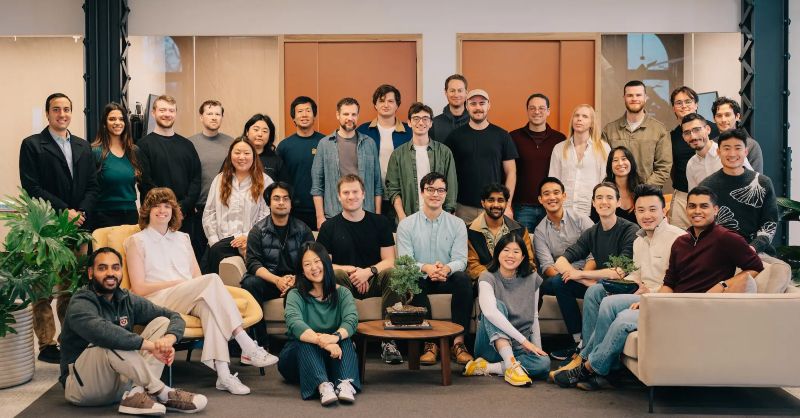
Goodfire’s team comprises top AI researchers from DeepMind and OpenAI, leading academics from Harvard, Stanford and more, and top ML engineering talent from OpenAI and Google.
The team includes Nick Cammarata, a core contributor to the seminal interpretability team at OpenAI, co-founder Tom McGrath, who founded the interpretability team at Google DeepMind, and Leon Bergen, a professor at UC San Diego (on leave).


Follow Startup Story


Related Posts