
COPD, Air Pollution and Changing Weather: Why Respiratory Health Needs More Attention
- ByStartupStory | November 14, 2026

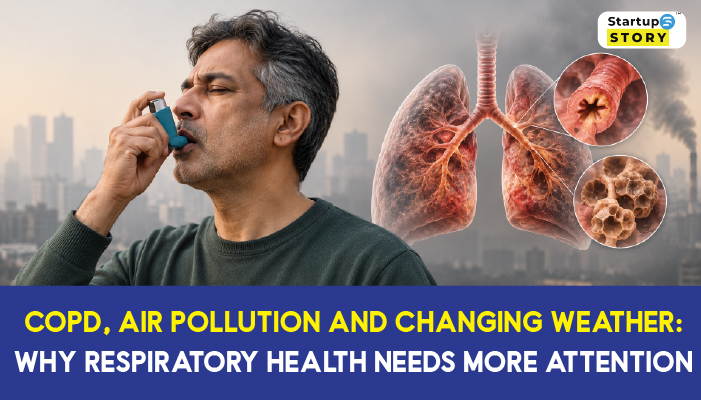
As Delhi-NCR grapples with deteriorating air quality and seasonal weather changes, medical experts warn that persistent respiratory symptoms should not be dismissed as routine seasonal discomfort.
Air pollution has become a major concern in public health in urban India and Delhi-NCR is one such region that faces challenges from pollution, especially during the winter season. While the immediate impact of pollution may be in relation to coughing, breathing problems, and irritation in the throat, the impact of pollution can go much deeper than that.
In the case of people who suffer from chronic respiratory diseases like COPD, asthma, and bronchitis, the poor quality of air and changes in weather can worsen their current condition.
According to medical practitioners, increased public awareness, preventive action, and early consultation are key in minimizing health hazards caused by environmental exposure.
Recognising the Early Warning Signs
Airborne pollution symptoms during the season can be easily misunderstood as symptoms of seasonal allergies or temporary annoyance. Yet, coughing, wheezing, chest constriction and breathlessness can also point to airway irritation or an existing respiratory ailment.
Dr. Renu Soni, MBBS, MD (Respiratory Medicine), Consultant Pulmonologist, emphasises the importance of recognising these symptoms rather than overlooking them.
“A persistent cough, wheezing, chest tightness or breathlessness during pollution season in Delhi NCR may indicate irritation of the airways, or pollution-induced lung inflammation, such as asthma or bronchitis.”
She also recommends that people check the AQI and limit their outdoor exercise or take extra precautions when the air quality declines to safeguard their kids and elderly members. It is necessary for one to seek medical help for worsening conditions, but severe respiratory problems require immediate medical assistance.
Protecting Those Most Vulnerable to Air Pollution
Although pollution impacts everyone, some people could be more vulnerable than others. For instance, outdoor workers, young people, the elderly, pregnant women, and those with respiratory and cardiovascular diseases need to be especially careful when there is poor air quality.
For people whose occupations require prolonged outdoor exposure, avoiding polluted environments may not always be practical. However, precautions can help reduce exposure.
Dr. Shrey Srivastav, MBBS, MD (Internal Medicine), Consultant Physician, highlights the importance of practical preventive measures.
“Outdoor workers need to monitor the AQI value, avoid engaging in vigorous activities in times of high pollution, and wear a properly fitted N95 mask when pollution is bad or very bad.”
He further goes on to state that children, especially those who are under five years old, the elderly, pregnant women, as well as patients suffering from asthma, COPD, past lung diseases, and heart disease need to be more cautious. Availability of medication and consulting a doctor in case the symptoms become worse is equally important in the management of their health.
Air Pollution: A Threat Beyond Respiratory Health
While the respiratory system remains one of the earliest systems affected by pollution of the air, the health consequences of the pollution extend beyond the lungs. Recent medical studies have shown a rising number of links between air pollution and cardiovascular disease, neurologic problems, pregnancy complications, and metabolic issues.
Particulate matter, especially PM2.5 is capable of reaching deep inside the lungs, and some of the particles along with their compounds are also able to reach the blood stream, causing inflammation.
Dr. Prashant Swarnkar, MBBS, MD (Internal Medicine), Consultant Physician, draws attention to this broader impact.
“Air pollution goes beyond just an issue with breathing. Apart from respiratory diseases, air pollution can have an impact on the heart and cardiovascular system, resulting in heart disease and stroke. There are also impacts on the brain, pregnancy, and metabolism. The fine particles that make up air pollution can get into the bloodstream, impacting overall health.”
His observations underline why air pollution needs to be viewed as a wider public health challenge rather than exclusively an environmental or respiratory issue.
Making Preventive Healthcare a Priority
While the region of Delhi-NCR faces seasonal changes in terms of air quality, it becomes important for everyone to give importance to their respiratory health.
Tracking the levels of AQI, minimizing unnecessary exposure to outdoor environments during pollution events, applying proper protective measures, and adhering to recommended treatment protocols can aid in managing exposure and health risks.
Another key point to remember is that one must not assume that a persistent cough or difficulty breathing is the result of weather change or age-related issues.
In conclusion, tackling the health impacts of air pollution involves much more than just taking temporary measures. There is a need for constant public awareness and healthcare, and working towards better air quality.
Protecting respiratory health begins with recognising the risks, responding to early warning signs and treating clean air as an essential component of public health.


Follow Startup Story


Related Posts