
Trumponomics – A hedge in geopolitical landscape
- ByStartupStory | June 3, 2026

The global geopolitical landscape is witnessing a visible shift as the United States recalibrates its priorities, moving away from an expansive international role toward a more inward-focused economic and political strategy. This change is not abrupt, nor is it entirely new, but it has become sharper and more deliberate under the ideological continuation of the “America First” doctrine associated with Donald Trump. The emphasis today is less on global leadership and more on domestic economic revival, revenue generation, and strategic self-reliance.
At the core of this policy shift lies a gradual withdrawal of interest from active geopolitical management. The United States is no longer as willing to bear the financial and political costs of sustaining global order. Instead, Washington is increasingly viewing international engagement through a transactional lens, where economic benefit outweighs strategic responsibility. This thinking is reflected in the reintroduction of reciprocal tariffs, where countries exporting to the U.S. are subjected to similar trade barriers that American goods face abroad. While these tariffs are not universally applied-essential and emergency products such as medicines, energy inputs, and critical components often remain exempt-the broader message is clear: access to the U.S. market must now come at a price.
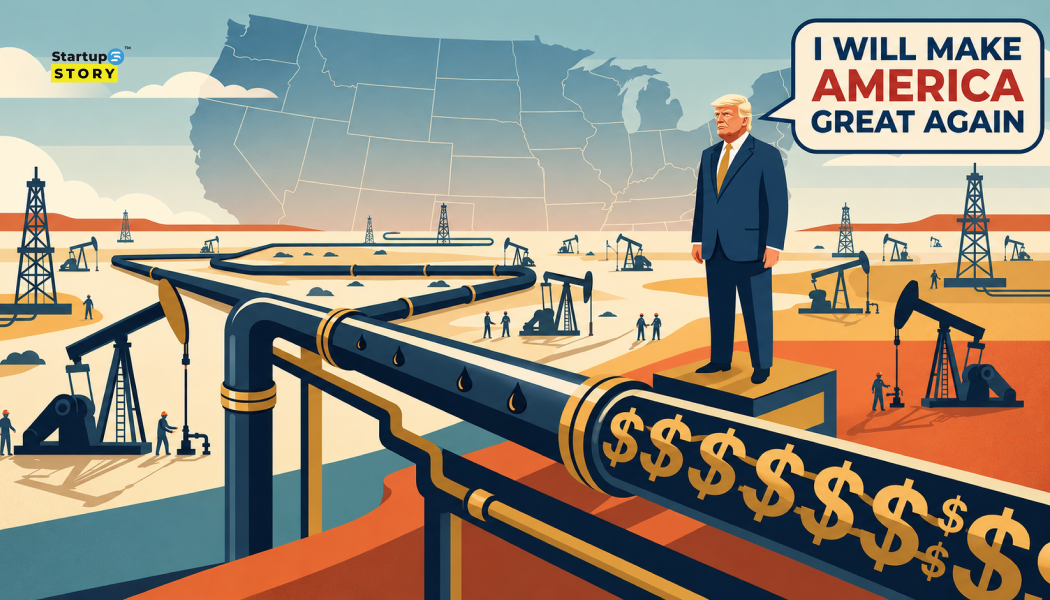
Revenue generation has become a central objective of this approach. Higher tariffs increase government income while also discouraging imports, theoretically pushing companies to relocate manufacturing within U.S. borders. The revival of fossil fuel extraction under the banner of “drill, baby, drill” fits into this logic. By expanding domestic oil and gas production, the U.S. aims to reduce energy imports, stabilize supply, and generate additional revenue streams, even at the cost of climate commitments. Energy independence is being framed not as an environmental debate, but as a fiscal and strategic necessity.
At the same time, domestic economic relief has become politically indispensable. Despite tariff-driven revenue gains, high import duties raise the cost of goods, leading to inflationary pressures. Everyday products-from electronics to household essentials—become more expensive, effectively transferring the burden of tariffs onto consumers. To offset this, income tax reductions are positioned as a balancing mechanism. Lower taxes are intended to restore purchasing power and maintain public support for protectionist policies.
A particularly controversial aspect of this tax strategy is the significant relief offered to high-income individuals and corporations. The logic behind this move is rooted in investment behaviour. By increasing the financial capacity of the wealthy, policymakers expect capital to be reinvested domestically in factories, infrastructure, and innovation. In theory, this would generate employment, revive industrial regions, and reduce long-term dependence on foreign manufacturing hubs, particularly in Asia. The long-term vision is clear: bring production back to American soil, even if the transition is costly and disruptive in the short run.
However, translating this vision into reality is far from simple. The United States is grappling with a mounting fiscal challenge. Its debt-to-GDP ratio has climbed to nearly 130 percent, placing it among the most indebted nations in the world in absolute terms. As the world’s largest debtor, the U.S. relies heavily on continuous borrowing to sustain its economic model. Rising interest rates have compounded this problem. Yields on U.S. Treasury bonds have increased, making debt servicing more expensive and putting pressure on future budgets.
Ironically, these higher bond yields have attracted global foreign institutional investors, many of whom are selling assets in emerging markets to invest in safer, higher-return U.S. debt instruments. This inflow strengthens the bond market but also tightens global liquidity, increasing financial stress in developing economies. At the same time, it deepens America’s dependence on debt-financed stability rather than production-driven growth.
The dominance of the U.S. dollar, long considered unshakeable, is also facing renewed scrutiny. Persistent deficits, rising debt, and politicized use of financial sanctions have encouraged countries to seek alternatives. A weaker dollar could, paradoxically, align with Trump-era thinking. A deliberate or tolerated depreciation would make U.S. exports cheaper, attract foreign investment, and reduce the real burden of debt. However, such a move would risk undermining global confidence in the dollar as a reserve currency.
Recent warnings from the International Monetary Fund regarding U.S. fiscal sustainability have added to these concerns. While a downgrade does not imply immediate crisis, it signals growing unease about long-term debt management. If borrowing continues unchecked, U.S. debt could increasingly resemble perpetual bond-like instruments rather than obligations expected to be meaningfully reduced—an arrangement sustainable only as long as global confidence remains intact.
This is where emerging blocs such as BRICS enter the picture. With efforts to promote trade in local currencies, alternative payment systems, and reduced reliance on the dollar, BRICS nations are exploring a parallel financial architecture. While these initiatives are still fragmented and face internal contradictions, they reflect a broader dissatisfaction with dollar-centric global finance. If coordinated effectively, they could accelerate a slow but meaningful shift in the global economic order.
In essence, the current U.S. policy transformation is a gamble – one that prioritizes domestic revival over global stewardship. It seeks to trade short-term inflation and financial strain for long-term industrial renewal and economic sovereignty. Whether this strategy succeeds will depend not only on internal reforms but also on how the rest of the world adapts. If global confidence in U.S. institutions and the dollar holds, America may successfully reset its economic base. If it falters, the world may move faster toward a multipolar financial and geopolitical system, reshaping power balances for decades to come.
Article researched and written by Mayank Sati


Follow Startup Story


Related Posts