
India’s Circular economy to reach $45 billion opportunity by 2030 : Kalaari Capital report
- ByStartupStory | April 23, 2022

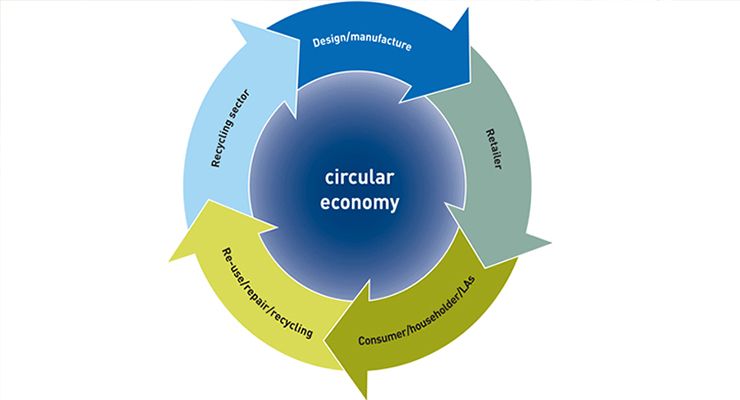
India’s circular economy is likely to touch $45 billion by 2030, according to a report by venture capital fund Kalaari Capital. The report added that adopting circular economy practices can help generate savings of more than $624 billion by 2050 across sectors such as mobility, food, agriculture, and construction, in India.
Sectors including fashion, food, mobility, construction, agriculture, and rare earth materials are also expected to provide the highest opportunities for circular economy startups. A circular economy ecosystem is defined by a closed-loop production model where resources are reused and kept in the production loop, allowing for creating more value generation. The main aim of this ecosystem is to retain as much value as possible from materials and products to create an ecosystem that sustainably promotes recycling, reuse, longevity and refurbishment,the report highlighted.
“India is expected to become the world’s third-largest economy by 2030, accounting for nearly 8.5% of global GDP. If the global circular economy touches $4.5 trillion by 2030, then we’re looking at a 45 billion USD opportunity, provided India captures just 1% of this market. If India’s share of the circular economy matches its contribution to global GDP at 8.5%, we’ll have more than $380 billion circular economies here,” according to the report.
More than 60% of the deal volume within the circular economy and around 80% of the value of deals comprise of mitigation-oriented innovations in energy and transportation, the report stated.
The report also pointed to several models companies could adopt in the circular economy, including recovery and recycling, product life extension, circular supply chain, sharing as a service, and product as a service.


Follow Startup Story


Related Posts